How Everyday Road Mishaps and ‘Third-Party’ Liability Shape Motor
Insurance Protection in India
It was a typical Monday morning in Chennai
when Priya set out to drop her brother at college. Traffic was building along
Anna Salai road, and the chill of the early winter air was punctuated by honks
and brakes. At a junction near the bus stop, a speeding two-wheeler skimmed the
rear of her compact hatchback. Thankfully, no one was seriously hurt. But when
the young rider lost balance and crashed into a parked scooter, the metal bent,
paint chipped, and tension rose.
Most of these reported incidents aren’t
dramatic collisions heard across media; many are the everyday fender-benders
that occur at junctions, in parking lots, or while changing lanes. Yet even
these minor accidents can trigger complicated legal and financial
ramifications, especially when they involve damage to someone else’s vehicle,
property, or person.
This is where one of the most important
parts of motor insurance comes into play—third party liability coverage.
Understanding Third-Party Damage and Why It Matters
In everyday urban traffic, whether it’s a
rider clipping a bumper in Bengaluru or a car knocking over a roadside vendor’s
stall in Delhi, it’s usually someone elsewho suffers the loss. Vehicles
involved, pedestrians hit, or property damaged due to a driver’s negligence are
all treated as third-party losses under insurance parlance.
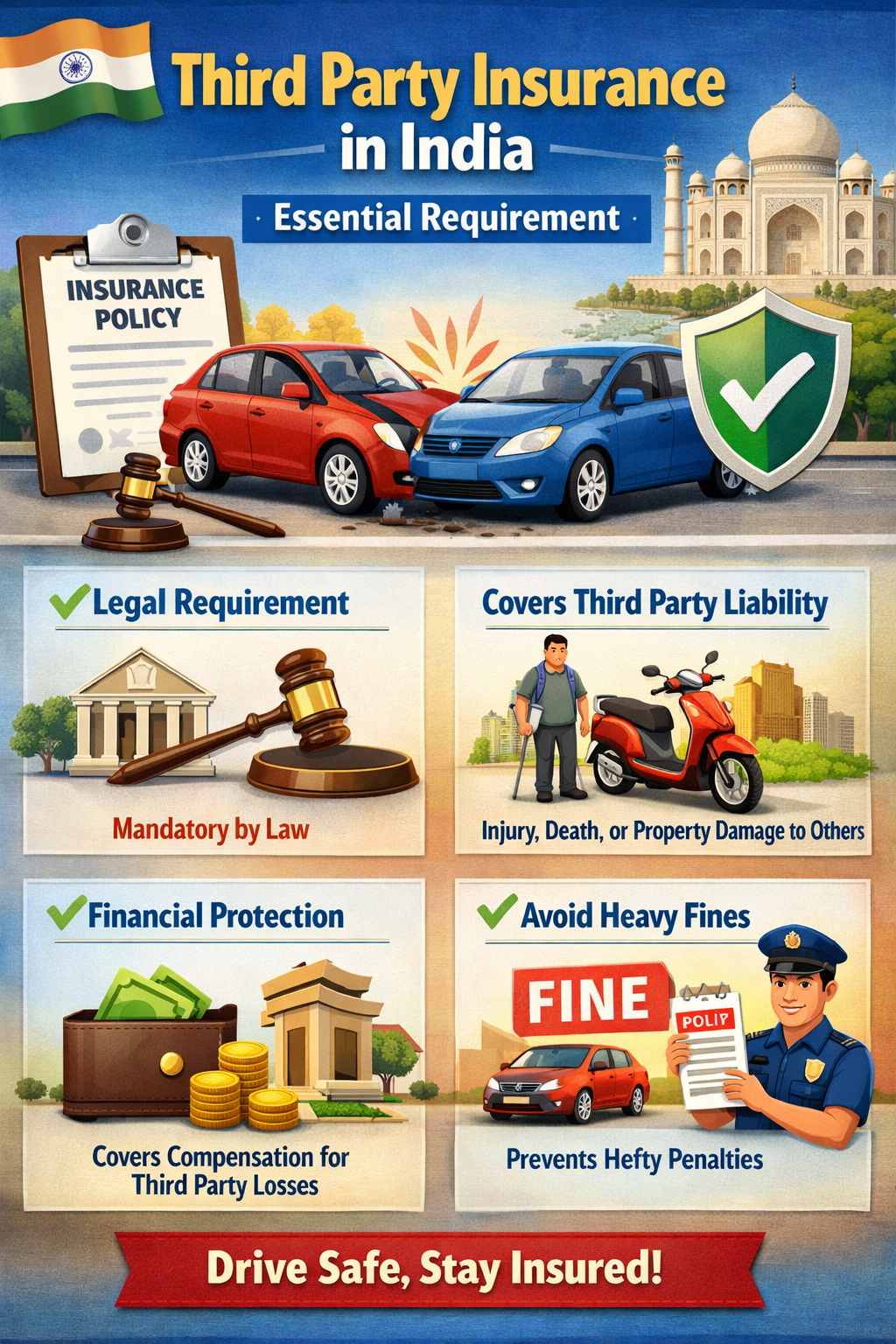
Legally, every vehicle plying Indian roads
must have third-party liability insurance. As per the Motor Vehicles Act,
1988, driving on public roads without valid third-party insurance is
not just risky, it’s unlawful. This compulsory cover safeguards you against the
legal liabilities that arise if your vehicle causes damage, injury, or death to
a third party.
Put simply:
l
First party= you (the insured
driver or owner)
l
Second party= your insurance
company
l
Third party= any person or
property affected by your vehicle in an accident
In Priya’s case, though her car was largely
unscathed from the initial bump, the scooter that was hit and dented belonged
to another commuter. The law requires compensation for such damage, and that’s
where third-party insurance kicks in.
What Third-Party Insurance Covers (and What It Doesn’t)
When a minor road accident causes damage to
someone else’s vehicle or injures another person, your third-party liability
policy covers:
l
Property damage: Repair costs for the third party’s car, scooter, or roadside
property damaged in the accident.
l
Bodily injury: Medical costs for injuries sustained by another person.
l
Death claims: Compensation if a third party tragically dies due to the accident.
However, it’s crucial to understand what
this policy doesn’t cover:
l
Damage to your own vehicle
l
Your own medical expenses
If Priya had only third-party insurance and
her own car suffered damage in the crash, her insurer wouldn’t cover her repair
bills. For that, she would need a comprehensive motor insurance policy, which
builds on third-party cover by including damage to your own vehicle too.
Comprehensive policies combine your repair
costs plus third-party liabilities in one package, a smart choice in India’s
dense traffic realities.
How Insurance Protects Drivers and Victims Alike
For a driver like Priya, having third-party
insurance meant she didn’t have to pay out of pocket for damage to the scooter
or any minor injury claims that might arise. Her insurer stepped in to settle
the liability in accordance with policy terms and statutory limits. This kind
of coverage:
l
Reduces legal exposure: Insurance handles compensation negotiations or payouts as required.
l
Ensures victims get relief
quickly: Third parties don’t need to wait for the
driver’s personal funds to cover medical or repair costs.
l
Provides peace of mind: Drivers can focus on safe driving without fearing financial ruin
over everyday misfortunes.
It’s this financial buffer that makes
third-party insurance such a vital tool in road safety policy—especially in a
country where daily traffic volumes are exploding, and minor mishaps are all
but inevitable.
Beyond the Crash: Legal and Practical Takeaways
Indian roads are a complex mix of vehicles,
pedestrians, cyclists, buses, and goods carriers. With around half a million
accidents recorded annually, the likelihood of encountering a minor collision
is real for most commuters.
For everyday drivers, three practical
lessons stand out:
1. Third-party insurance isn’t optional;
it’s the law. Driving without it can attract fines and penalties under the
Motor Vehicles Act.
2. Comprehensive insurance enhances
protection, including own damage, theft, fire, and natural peril coverage on
top of third-party liabilities.
3. Always report and document accidents, even
seemingly minor ones, before repairs or settlements, to ensure smooth claims.
As Priya reflected later, “It seemed like a
tiny bump at first, but without insurance, even small bills and legal worries
could have turned into a long fight.” That’s why understanding the layers of
motor insurance—from compulsory third-party cover to optional add-ons—is
essential for every Indian driver.
Conclusion: Everyday Roads, Everyday Protection
Road accidents don’t always make breaking
news. More often, they are the almost-routine incidents that happen at busy
intersections, stalled signals, or parking lots as we rush through our day.
These minor road accidentscan easily spiral into legal or financial hassles
without the right insurance cover.
Third-party liability insurance may seem
like just another box to tick, but it’s a legal necessity and financial shield that
ensures drivers and victims don’t end up in bitter disputes or costly battles
after a collision.
In a country with nearly half a million
accidents reported each year, and with many drivers still uninsured, adopting
and maintaining valid motor insurance isn’t just smart, it’s a responsible
habit that keeps India’s roads safer and its citizens more secure.